Custom Motors for Specialty Vehicles: A Game Changer
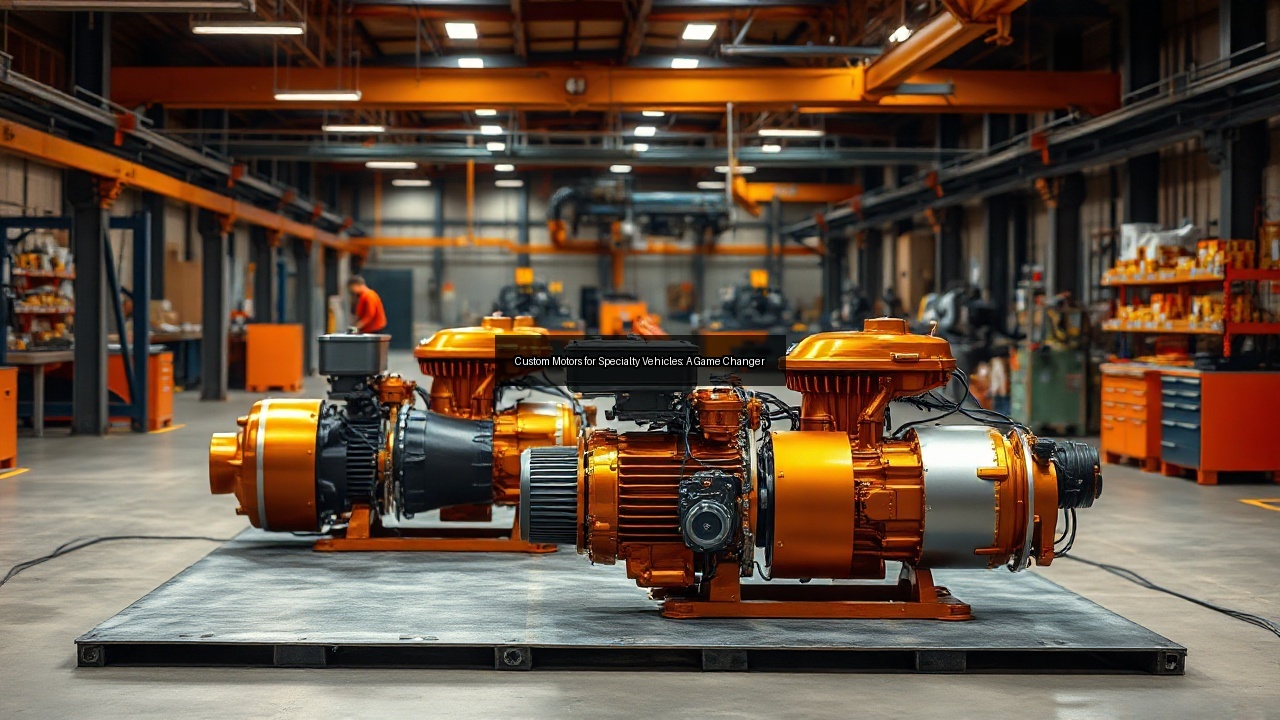
The Evolution of Custom Motors in Specialty Vehicles
Historical Overview of Custom Motors
Custom motors have transformed the landscape of specialty vehicles over the decades. Initially, vehicles relied heavily on standardized motors that lacked the adaptability to meet specific performance needs. However, as industries evolved, the demand for tailored solutions surged. The advent of custom motors marked a significant shift, allowing manufacturers to design motors that catered to unique vehicle requirements. These innovations enabled vehicles to achieve higher efficiency and performance levels, particularly in niche markets such as emergency vehicles, off-road trucks, and specialized machinery.
The Rise of Electric Motors in Specialty Applications
Electric motors have steadily gained traction in specialty vehicles, driven by advancements in technology and a growing emphasis on sustainability. Electric motors, particularly custom electric motors, offer several advantages, including reduced emissions, lower operating costs, and silent operation. The shift toward electric motors has led to increased interest in customized solutions that meet the exacting standards of specialized applications. From electric trucks designed for urban delivery to electric motors powering specialized construction equipment, customizable electric motors are reshaping the industry.
Key Innovations: Brushless DC and Synchronous Motors
Brushless DC (BLDC) motors and synchronous motors represent pivotal innovations in the realm of custom motors. BLDC motors, known for their efficiency and longevity, eliminate the need for brushes, reducing wear and maintenance. Their compact design makes them ideal for applications where space and weight constraints are critical. On the other hand, synchronous motors provide high efficiency at a constant speed, making them perfect for applications requiring precision control. Both types of motors are increasingly utilized in specialty vehicles, enhancing performance while maintaining reliability.
Types of Custom Motors and Their Applications
Direct Current (DC) Motors for Precision Engineering
Direct current (DC) motors have established themselves as a cornerstone in precision engineering applications. Their ability to provide accurate speed and torque control makes them ideal for specialty vehicles that require fine-tuned performance. DC motors are often employed in robotics, automated systems, and other specialized applications where precise movements are paramount. The customization of these motors allows engineers to tailor their specifications to meet specific project requirements, ensuring optimal functionality in scenarios ranging from industrial machines to vehicle-mounted generators. The versatility of DC motors in precision engineering continues to drive innovation in custom motor solutions.
Alternating Current (AC) Induction Motors in Truck Applications
Alternating current (AC) induction motors have become a staple in the trucking industry, particularly for heavy-duty applications. Their durability and efficiency make them well-suited for long-haul trucks and other specialty vehicles. Custom induction motors can be designed to withstand the rigors of demanding environments while providing reliable performance. They excel in applications requiring high torque and continuous operation, such as powering hydraulic systems and auxiliary equipment in trucks. By leveraging the strengths of AC induction motors, manufacturers can enhance the functionality and efficiency of specialty vehicles in the transportation sector.
Servo Motors: Enhancing Control in Specialty Vehicles
Servo motors play a crucial role in enhancing control and precision in specialty vehicles. These motors utilize feedback mechanisms to ensure accurate positioning and speed control, making them ideal for applications that demand high responsiveness. In specialty vehicles, servo motors are frequently found in steering systems, robotic arms, and advanced automation processes. The ability to customize servo motors allows manufacturers to meet specific dynamics and performance criteria, resulting in improved vehicle handling and operational efficiency. The rise of automation in specialty vehicles further emphasizes the importance of servo motors in achieving superior control and reliability.
Manufacturing and Inventory Management for Custom Motors
The Custom Motor Manufacturing Process
The manufacturing process for custom customized motors motors involves a series of meticulous steps designed to ensure quality and performance. It begins with the design phase, where engineers collaborate with clients to define specifications. Once the design is finalized, the production phase commences, involving the sourcing of high-quality materials such as magnets, windings, and housings. Advanced technologies, including Computer Numerical Control (CNC) machining and 3D printing, often play a role in creating intricate components. Precision engineering is critical at every stage to guarantee that each motor meets the required standards for specialty applications. Following assembly, rigorous testing ensures that the custom motors perform reliably under real-world conditions.
Managing Inventory for Custom Electric Motors
Effective inventory management is essential for manufacturers of custom electric motors. The unique nature of custom motors means that stock levels can fluctuate significantly based on project demands. Implementing just-in-time (JIT) inventory strategies allows manufacturers to reduce excess stock while ensuring that materials are available when needed. Technology plays a vital role in managing inventory, with software solutions providing real-time tracking of components and assemblies. This approach not only minimizes waste but also enhances the responsiveness of manufacturers to changing market conditions and customer requirements, making it crucial for the sustainability of custom motor production.
Quality Control and Precision Engineering in Motor Production
Quality control is a fundamental aspect of custom motor production, particularly given the demands of specialty vehicle applications. Manufacturers employ rigorous testing protocols throughout the production process to ensure that each motor meets high-performance standards. Precision engineering techniques, such as laser measurement and advanced calibration systems, are utilized to assess motor functionality accurately. Any deviations from specified tolerances are addressed immediately, ensuring that only the highest quality custom motors reach the market. This commitment to quality not only enhances customer satisfaction but also reinforces the reputation of manufacturers as leaders in the custom motors industry.
The Future of Custom Motors in Specialty Vehicles
Emerging Trends in Electric Motor Technology
The future of custom motors in specialty vehicles is bright, driven by emerging trends in electric motor technology. Innovations such as integrated control systems and the use of advanced materials are set to enhance motor performance further. The rise of smart motors equipped with IoT capabilities will allow for remote monitoring and diagnostics, ensuring optimal performance and reducing downtime. Additionally, advancements in battery technology will complement electric motors, enabling longer operational ranges and improved efficiency. These trends signal a shift toward more sophisticated, high-performance custom motors tailored for diverse specialty applications, paving the way for unprecedented capabilities in the industry.
Sustainability and Efficiency in Custom Motor Design
As industries increasingly prioritize sustainability, the design of custom motors reflects this shift. Manufacturers are exploring eco-friendly materials and energy-efficient designs that reduce the carbon footprint of specialty vehicles. Custom electric motors can be optimized for higher efficiency, ensuring that energy consumption aligns with sustainability goals. Furthermore, the integration of regenerative braking systems in electric vehicles showcases how custom motors can contribute to energy conservation. This focus on sustainability not only meets regulatory requirements but also appeals to environmentally conscious consumers, positioning custom motors as a key player in the future of specialty vehicles.
See Also
- Transforming Industries with Customized Synchronous Motors
- Custom Electric Motors: Bridging the Gap Between Efficiency and Innovation
- Revolutionizing Electric Motors with Bespoke Designs
- The Art of Crafting Unique Motors for Specialized Applications
- Why Investing in Custom Motors Can Boost Your Business